Discover what you
didn't know was connected

Not a list of results — a route. LookBeyond shows how two ideas connect, document by document, across disciplines and from popular writing to peer-reviewed research, with the reason each step holds.

Through connections, to new knowledge and discoveries

Each one runs on the live graph: five documents that share no keyword, four hops, every step explained. Nothing to install, no account.
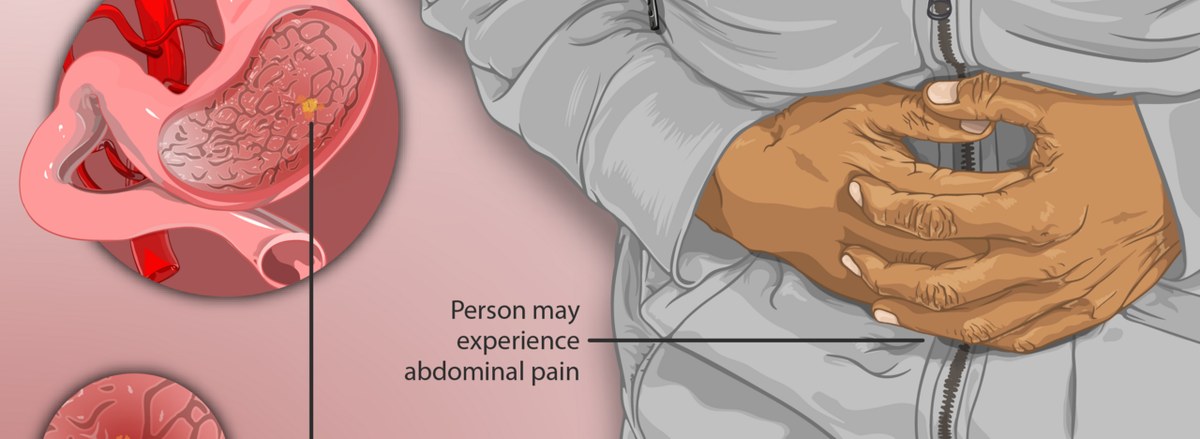
Does stress give you stomach ulcers?

Everyone knows it does. It was a bacterium — and a doctor who swallowed it to prove the point.

The stress belief ↓ Ulcers with neither cause
5 documents · 4 hops
Play the route →

Could a bird have killed her?

A novelist is convicted of pushing his wife down the stairs. Years later, the defence proposes an owl.

A death at the bottom of the stairs ↓ What a bird's foot can do
5 documents · 4 hops
Play the route →

Can AI clean up the pollution it helps create?

It is used to find pollution nobody can see, and it burns a great deal of power doing so.

AI that tracks city pollution ↓ Europe's rules for AI
5 documents · 4 hops
Play the route →

Licensed sources, on the record

Discovery tools are only as defensible as the corpus underneath them. Ours is built licence first: nothing is downloaded until the terms are on file, and every document keeps the licence it arrived under.

Checked before it is fetched

Each source's licence page is captured with a date and a checksum, and the importer refuses to run without it. When the wording later changes, we are told.

Filtered record by record

Open access is not one thing. Records that forbid commercial use or derivative work are skipped individually, not waved through because the aggregator looked permissive.

Traceable back to the origin

Every document carries its source, its licence and its link, so any claim you build on a route can be followed back to where it came from.

Search finds documents. We find the ways between them!

🧭

Discovery paths

Pick two ideas. The route appears between them one document at a time — and you can swap any stop for another and watch it rebuild around your choice.

🧱

Routes that cross the walls

Fields that never read each other. A news story and a peer-reviewed paper. Two repositories with nothing in common. The route crosses those lines because it follows meaning rather than citations or tags — and every stop shows which side of the line it stands on.

🎯

Search you can steer

Say what you are looking for, then anchor it to a person, an organisation or a concept. The search follows that anchor instead of guessing what you meant.

💬

Every step explained

For each hop: what the two documents have in common, and how closely they sit. Enough to judge a connection rather than take it on trust.

🗂️

Projects that remember

Keep what is worth returning to — a route, a lead, a view — and pick the investigation up where you left it, across sessions.

🗺️

Browse by topic

When you would rather start from a field than from a question: walk the category tree and drop into the graph wherever it gets interesting.

Built for Teams and Individuals

Academic & Scientific Research

Find interdisciplinary connections between papers from different fields. Surface the concepts and researchers that bridge your domain to unexpected neighbors.

Business & Product Teams

Make cross-functional sharing and open collaboration finally work. The knowledge is already there — it is just scattered across projects, departments and business contexts. Combine them into a single instance and see the precedents, risks, and outcomes behind every new decision.

Publishers and journalistic agencies

Monitor the thematic reach of your own content, see how the pieces connect, and find the blind spots — the series you have not written yet.

Patent Attorneys

Find inventions by full description. Move through deep similarity search in order to prove. Automate your reports' creation and generation to files. Go back to the evidence. Work to prove your points.

Why we're building this...

Knowledge doesn't live in a single paper, database or institution. Its strength is in how they connect, and the most useful findings tend to sit where fields cross: chemistry and medicine, research and the way it reaches the public.

LookBeyond is built for those crossings. You say what you're looking for, as narrowly as you like, and it lays out the route between ideas, with the reason each step holds. Nothing is suggested because of what you clicked last week. The question stays yours.

We're opening LookBeyond to:

Three people, named by what they do

No chief-something titles yet — at this stage they would describe an org chart that does not exist. LookBeyond is pre-commercial: three co-creators shaping it with early partners before anything is sold.

Paweł Łączny

Product & corpus

Decides what the product is for and builds the licensed corpus underneath it — which sources may be used, what each document carries with it, and which routes are worth showing. Former PM at HPE, IBM, Google and DataWalk..

Filip Wójcik

Graph & ML

Author of a book on graph neural networks, speaking on GraphRAG architecture at Data Science Summit in November. Works on the graph model and on the quality of the routes it produces — whether a connection holds, and how far it reaches.

Ewelina Czarnecka-Wójcik

Product design

Responsible for what someone understands in the first minute. A graph is easy to make impressive and hard to make usable; her job is the second one.

Start where it suits you

Let's work together

We're inviting research organisations and editorial teams to shape LookBeyond.io around the way their work actually happens — and we're open to investors backing it at this early stage. Founding partners get free access — forever.

No spam. A person reads every message and answers, usually within a day.